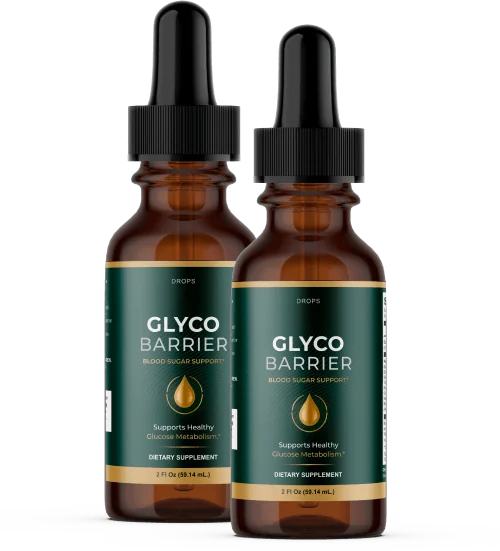
GlycoBarrier
A once-daily liquid drop marketed around glucose metabolism support, post-meal glucose response, and reduced sugar cravings. Before we looked at pricing, we wanted to know what's actually measurable in each dose — and how much of that we could independently confirm.
What's Actually in Each Dose
GlycoBarrier is a liquid drop supplement taken once daily under the tongue or mixed into a beverage. The label names eight ingredients: Berberine, Ceylon Cinnamon, Gymnema Sylvestre, Bitter Melon, Banaba Leaf, Chromium Picolinate, Juniper Berry, and Licorice Root. Unlike a combined proprietary blend, these aren't hidden behind a single umbrella weight — but the manufacturer's own site does not publish a milligram amount for any of the eight, so there's no way to know how much of each ingredient is actually delivered in a daily dose.
The Disclosure Gap
Naming every ingredient is more transparent than burying them in a blend, but naming isn't the same as dosing. The manufacturer's own site describes Berberine and Bitter Melon as the two ingredients "most directly associated with glucose metabolism and utilisation," and Berberine specifically as carrying "the strongest clinical research base in this category" — but without a published amount, there's no way to know whether it's present anywhere near the levels used in that research, or in a token amount mostly there for the ingredient list. We also didn't find any study — independent or company-run — that tested GlycoBarrier's finished formula as a whole. The manufacturer's own site acknowledges this directly, stating its cited research "refer[s] to research on the individual ingredients, not the finished Glyco Barrier product, which has not been the subject of its own clinical trial."
Three Ingredients Flagged for Real Interactions
The manufacturer's own FAQ discloses that Berberine, Chromium Picolinate, and Licorice Root "can each interact with medication for blood sugar, blood pressure or blood clotting," and recommends speaking to a doctor first if you take any of those medications. Licorice Root is separately described on the same site as "not suitable for long-term high-dose use." Because none of the three carry a published milligram amount, there's no way for a buyer to weigh that interaction risk against an actual dose — only against a name on an ingredient list.
Real Pricing, As Currently Listed
As of our latest check, the manufacturer's own site listed three package sizes: a 2-bottle supply at $59 per bottle ($118 total, plus shipping), a 3-bottle supply at $49 per bottle ($147 total, free shipping), and a 6-bottle supply at $39 per bottle ($234 total, free shipping). The 6-bottle listing is marked down from a stated "Was $414" reference price — equivalent to $69 per bottle — that we could not find charged anywhere else on the same site. Every package is described as a one-time purchase with no subscription or automatic rebilling. We're presenting these figures purely as information current at the time we checked; pricing on the seller's site can change.
Why We're Not Linking You to Purchase It
Between the undisclosed individual doses across all eight ingredients, the absence of any testing on the finished formula, and three ingredients with real, manufacturer-disclosed medication interactions that can't be weighed against an actual amount, we don't think it's responsible to route readers toward checkout without a way to independently confirm what they'd actually be swallowing. That's the bar we hold every listing on this site to, and GlycoBarrier doesn't clear it at the level of detail currently published.
The Return Policy, In Plain Language
The seller's site describes a 60-day money-back guarantee from the date of purchase, with a stated route to a refund through customer support within that window. Full terms are listed as being on the seller's own refund-policy page, which we did not independently audit for exceptions or conditions beyond what's summarized on the main site.
What We'd Look For Instead
If what draws you to GlycoBarrier is really the Berberine — the one ingredient the manufacturer itself describes as carrying the strongest clinical research base in this category — it's sold on its own by other brands at a disclosed, per-capsule milligram amount, which at least lets you check what you're taking against the doses used in published research, something an undosed ingredient list doesn't allow.
Where to Buy an Alternative
Because GlycoBarrier doesn't disclose individual ingredient amounts, we're linking to a standardized, single-ingredient Berberine supplement instead. We link to authorized retailers and may earn a commission at no extra cost to you.
See Berberine 500mg Supplement on AmazonOur Take
GlycoBarrier isn't unusual for its category — plenty of glucose-support formulas built around a longer ingredient list skip individual dosing the same way. But between doses that aren't disclosed for any of its eight ingredients, no testing we could find of the finished formula, and three ingredients carrying real medication-interaction warnings that can't be checked against an actual amount, we can't tell you what you'd actually be getting per dose beyond a general list of names. If Berberine specifically is what interests you, buying it on its own at a disclosed, verifiable dose is the more transparent route. GlycoBarrier is a dietary supplement, not a treatment for diabetes, prediabetes, or any diagnosed condition, and shouldn't replace medication or monitoring prescribed by a doctor.
Talk to a healthcare provider before starting any new supplement, especially if you take medication or have a health condition.
These statements have not been evaluated by the FDA. This product is not intended to diagnose, treat, cure, or prevent any disease.
As an Amazon Associate, VitaNews Daily earns from qualifying purchases. This review reflects our own research and is not a guarantee of any outcome.